The Kazakh Steppe
The Kazakh Steppe is one of the defining landscapes of Kazakhstan.
Stretching across enormous areas of the country, the steppe is characterized by wide-open grasslands, rolling plains, distant mountains, dramatic skies and a remarkable sense of space.
For many travelers, Kazakhstan is first associated with Almaty, mountain lakes and destinations such as Kolsai, Kaindy and Charyn Canyon. These places are spectacular, but they represent only one part of the country.
The steppe reveals a different side of Kazakhstan.
Here, the landscape is often open for kilometers in every direction. Roads cross seemingly endless plains, small settlements appear between large expanses of grassland, and the horizon becomes an important part of the travel experience.
A journey through the Kazakh Steppe is therefore less about visiting one single attraction and more about experiencing the scale, geography and culture of Kazakhstan.
What Is the Kazakh Steppe?
The Kazakh Steppe is a vast belt of grassland covering a significant part of northern and central Kazakhstan.
It forms part of the larger Eurasian Steppe, which stretches across much of Eurasia.
The landscape is not completely uniform.
Depending on the region, travelers can encounter:
-
Open grasslands
-
Semi-desert landscapes
-
Rolling hills
-
Lakes
-
Rivers
-
Rocky formations
-
Mountain ranges
-
Forest-steppe areas
-
Wildlife habitats
-
Traditional rural settlements
This variety makes the steppes of Kazakhstan more interesting than the simple image of an endless flat plain.
The scenery changes with geography and season.
In spring, some areas become green and colorful. Summer can bring dry golden landscapes, while autumn creates softer colors and cooler conditions.
Where Is the Kazakh Steppe?
The steppe covers a large part of northern and central Kazakhstan and connects with other steppe regions across Eurasia.
Because Kazakhstan is the world's largest landlocked country, distances between destinations can be enormous.
Travelers should therefore think of the Kazakh Steppe as a geographical region rather than one specific tourist attraction.
Different parts of the steppe can be accessed from cities such as:
-
Astana
-
Karaganda
-
Kostanay
-
Pavlodar
-
Semey
-
Other regional centers
Some steppe landscapes are also incorporated into longer Kazakhstan road trips.
If your trip begins in Almaty, the landscape changes dramatically as you travel north or east toward different regions of the country.
Why Visit the Kazakh Steppe?
The steppe offers a travel experience that is very different from conventional city tourism.
1. Experience Vast Open Landscapes
The biggest attraction is scale.
You can travel for hours and see enormous stretches of open landscape.
For travelers accustomed to densely populated cities, this sense of space can be one of the most memorable parts of visiting Kazakhstan.
2. Photography
The Kazakh Steppe is excellent for landscape photography.
The combination of open terrain, changing light, distant horizons and dramatic clouds can create striking images.
Sunrise and sunset can be particularly impressive because there are few large structures blocking the horizon in many areas.
3. Learn About Nomadic Heritage
The steppe has played an important role in the history and culture of Central Asia.
For centuries, communities adapted their lives to the seasonal movement of people, animals and resources across these vast landscapes.
Modern Kazakhstan is highly urbanized, but connections with nomadic heritage remain an important part of national culture.
4. Explore Beyond the Main Tourist Routes
Many international visitors focus on Almaty and its surrounding mountains.
Traveling into the steppe provides an opportunity to experience a less familiar side of Kazakhstan.
Instead of mountain lakes and alpine forests, you encounter plains, open roads, remote settlements and enormous horizons.
The Landscape of Kazakhstan's Steppes
The phrase "Kazakh Steppe" can make the landscape sound completely flat and identical everywhere.
In reality, it is much more varied.
Northern Steppe
Northern areas contain extensive grasslands and agricultural landscapes.
Some regions transition into forest-steppe environments.
These areas are particularly important for agriculture and wildlife.
Central Steppe
Central Kazakhstan contains broad open plains, hills, rocky landscapes and semi-arid areas.
The scenery can appear extremely remote, especially away from major settlements.
Eastern Steppe
Eastern Kazakhstan has a more varied geography, with steppe landscapes transitioning toward mountain regions.
Travelers can encounter a combination of open plains and dramatic mountain scenery.
Southern and Southeastern Steppe
The southern part of Kazakhstan includes more arid landscapes and transitions toward deserts and mountain systems.
This creates opportunities to combine steppe landscapes with destinations such as national parks and mountain regions.
Best Places to Experience the Kazakh Steppe
There is no single "best" steppe destination because different regions provide different experiences.
Here are some areas worth considering.
Astana and the Surrounding Steppe
Astana is one of the easiest urban starting points for experiencing the northern Kazakh Steppe.
The contrast between the modern capital and the vast open landscape surrounding the city is particularly interesting.
You can spend time exploring the city before traveling outward into the surrounding plains.
Korgalzhyn Region
The Korgalzhyn area is known for wetlands, lakes and birdlife surrounded by steppe landscapes.
It demonstrates that the steppe is not simply dry grassland.
Wetlands within the steppe support important ecosystems and migratory birds.
For travelers interested in nature and wildlife, this region can provide a different interpretation of the Kazakh Steppe.
Burabay Region
Burabay, located north of Astana, provides a striking combination of forests, lakes, rocky formations and steppe landscapes.
The scenery is very different from the completely open plains found elsewhere.
This makes Burabay a useful destination for travelers who want to combine nature with an accessible road trip from northern Kazakhstan.
Karaganda Region
Karaganda is located in central Kazakhstan and provides access to large areas of steppe.
The region is also important historically and culturally.
Travelers interested in Kazakhstan beyond the major tourist centers can use Karaganda as a base for exploring central landscapes and historical sites.
Ulytau
Ulytau is particularly interesting for travelers who want to connect the landscape with the history of the Kazakh people.
The region contains mountains, steppe and important historical and cultural sites.
It provides an opportunity to experience a more remote part of central Kazakhstan.
Altyn Emel National Park
Altyn Emel is not a classic green grassland steppe destination, but it demonstrates the incredible range of Kazakhstan's open landscapes.
The national park contains desert, semi-desert and mountain scenery.
The famous Singing Dune and Aktau Mountains make it particularly attractive for travelers interested in unusual landscapes.
Travelers starting in Almaty can consider an Altyn Emel Tour from Almaty.
Kazakh Steppe Wildlife
The steppe is an important habitat for a variety of animals.
Depending on the region and season, wildlife can include:
-
Saiga antelope
-
Steppe eagles
-
Marmots
-
Foxes
-
Wolves
-
Various migratory birds
-
Other grassland species
The saiga is particularly associated with Kazakhstan's steppe ecosystems.
Wildlife sightings are never guaranteed, and travelers should maintain an appropriate distance from animals.
For serious wildlife observation, visiting with an experienced local guide can improve the experience.
Saiga Antelope and the Kazakh Steppe
The saiga antelope is one of the most recognizable animals associated with the Eurasian Steppe.
Kazakhstan contains important saiga populations, making the country significant for conservation of the species.
The unusual shape of the saiga's nose is one of its most distinctive characteristics.
Seeing saiga in their natural environment can be an unforgettable experience, but wildlife tourism should always prioritize responsible observation.
Travelers should never approach, chase or disturb wild animals for photographs.
The Kazakh Steppe and Nomadic Culture
The history of Kazakhstan cannot be separated from the steppe.
For generations, nomadic and semi-nomadic communities adapted their lifestyles to the environment.
Livestock, seasonal movement and knowledge of water sources were important parts of life across the region.
The traditional yurt is one of the most recognizable symbols associated with this heritage.
Today, yurts are still used for cultural experiences, celebrations and tourism.
Travelers who visit the steppe may have opportunities to learn about:
-
Traditional food
-
Horse culture
-
Yurts
-
Handicrafts
-
Music
-
Hospitality
-
Traditional games
-
Nomadic history
A cultural experience can make a steppe journey much more meaningful than simply driving across the landscape.
Horse Culture in the Kazakh Steppe
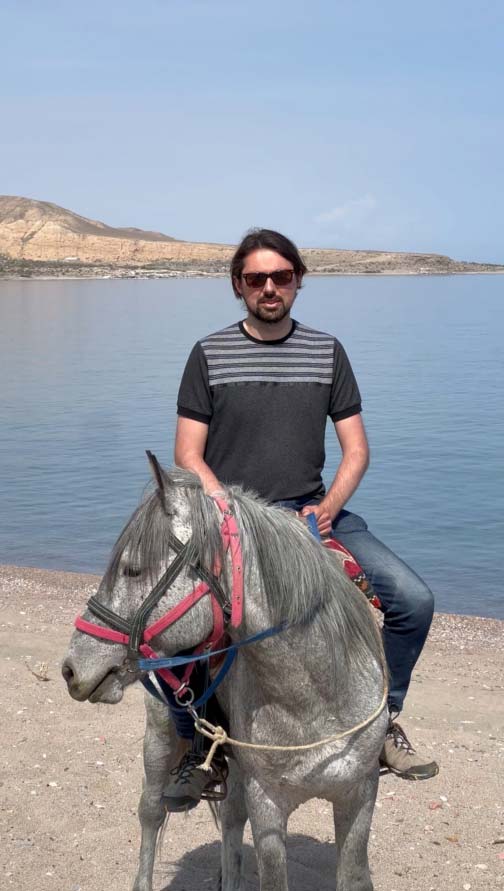
Horses have played an important role in the history and culture of the steppe.
Horse riding remains part of traditional culture and can also be experienced by travelers through organized rural and cultural activities.
If you are interested in horseback experiences, choose an organized activity where animal welfare and rider safety are properly considered.
The connection between horses and the open steppe is one of the most distinctive cultural experiences available in Kazakhstan.
Best Time to Visit the Kazakh Steppe
The best time depends on what you want to see and do.
Spring
Spring can transform the steppe.
After winter, grasslands become greener and wildflowers can appear in some areas.
Temperatures are generally more comfortable for outdoor exploration than during the peak of summer.
Spring can be particularly attractive for nature photography.
Summer
Summer is warmer and can become hot in many steppe regions.
The landscape often takes on golden and dry tones.
Long daylight hours are useful for road trips, but travelers should prepare for heat and limited shade.
Carry sufficient drinking water when traveling through remote areas.
Autumn
Autumn brings cooler weather and changing colors.
The softer temperatures can make long road journeys more comfortable.
This can also be an attractive season for photographers.
Winter
Winter completely changes the steppe.
Snow can cover large areas, temperatures can become extremely low and road conditions can be difficult.
Winter travel requires more preparation and should be planned around current weather and road conditions.
Kazakhstan Steppe Weather
There is no single weather pattern for the entire Kazakh Steppe because the region is enormous.
Seasonal temperature differences can be substantial.
Spring
Expect changing conditions, with cool periods followed by warmer weather.
Summer
Many areas can become hot and dry.
Sun protection and water are essential.
Autumn
Temperatures generally become cooler and conditions can be comfortable for road travel.
Winter
Cold conditions and snow can affect large areas.
Road conditions may change quickly, especially during storms.
If you are planning a long-distance steppe trip, check the weather and road conditions before departure rather than relying on a general seasonal description.
How to Travel Through the Kazakh Steppe
The best transportation method depends on your itinerary.
Private SUV
A private SUV is particularly useful for travelers planning to explore remote landscapes or combine several destinations.
Advantages include:
-
Flexible departure times
-
Private transportation
-
Ability to stop for photographs
-
Customized routes
-
Local driver knowledge
-
More flexibility around weather
For travelers planning a wider road trip, explore Private SUV Tours in Kazakhstan and Kyrgyzstan.
Rental Car
Independent travelers can consider renting a car for suitable routes.
However, Kazakhstan's distances are large, and remote roads require careful planning.
Before renting, confirm:
-
Insurance
-
Road restrictions
-
Vehicle suitability
-
Navigation
-
Fuel availability
-
Emergency procedures
Train
Kazakhstan has an extensive rail network connecting major cities.
Train travel can be an efficient way to move between cities, after which travelers can use local transportation or organized tours to explore surrounding regions.
How Many Days Do You Need for a Kazakhstan Steppe Trip?
There is no single ideal duration.
One Day
A one-day trip can work for travelers based near Astana or another city with nearby steppe attractions.
This is best for a short introduction.
Two to Three Days
A longer road trip allows you to explore more remote landscapes and combine natural and cultural attractions.
Five to Seven Days
A longer itinerary can connect several regions and provide a much deeper understanding of Kazakhstan's geography.
Travelers can combine steppe landscapes with national parks, historic sites, mountain regions and cities.
Can You Combine the Steppe with Almaty?
Yes, but travelers should understand that Almaty and the classic steppe landscapes represent different geographical environments.
Almaty is surrounded by the Tian Shan mountains.
Popular excursions from Almaty include:
-
Big Almaty Lake
-
Kolsai Lakes
-
Kaindy Lake
-
Charyn Canyon
-
Altyn Emel
-
Asy Plateau
Travelers interested in combining mountain and open-landscape experiences can build a longer Kazakhstan itinerary.
For mountain attractions, you can explore Kolsai Lake Tours from Almaty and Big Almaty Lake Tours.
Kazakh Steppe vs Kazakhstan Mountains
The steppe and mountains offer completely different travel experiences.
Kazakh Steppe
Best for:
-
Wide-open landscapes
-
Road trips
-
Wildlife
-
Photography
-
Nomadic culture
-
Remote travel
-
Historical exploration
Kazakhstan Mountains
Best for:
-
Lakes
-
Hiking
-
Forests
-
Alpine scenery
-
Skiing
-
Mountain photography
Travelers with enough time should consider experiencing both.
A Kazakhstan itinerary combining Almaty and mountain destinations with a central or northern steppe journey can provide a much broader understanding of the country.
What to Pack for a Kazakh Steppe Trip
Your packing list should depend on the season and destination.
Essential Items
-
Comfortable shoes
-
Weather-appropriate clothing
-
Sun protection
-
Sunglasses
-
Hat
-
Reusable water bottle
-
Power bank
-
Phone with offline maps
-
Personal medication
-
Snacks
For Summer
Add:
-
Lightweight clothing
-
High-SPF sunscreen
-
Extra drinking water
-
Hat
-
Insect protection where appropriate
For Winter
Add:
-
Thermal layers
-
Warm jacket
-
Gloves
-
Warm hat
-
Waterproof footwear
-
Extra layers
Remote travel requires more preparation than a normal city visit.
Is the Kazakh Steppe Safe for Travelers?
Traveling through the steppe can be safe when properly planned, but remote environments require additional preparation.
The biggest practical concerns are often distance, weather, fuel availability, mobile coverage and road conditions.
Before driving into remote areas:
-
Check weather conditions
-
Confirm the route
-
Carry enough fuel where necessary
-
Carry water
-
Keep communication available
-
Inform someone of your route
-
Avoid unnecessary off-road driving
-
Use an experienced local driver when appropriate
Do not assume that a remote road will have the same services available in Almaty or Astana.
Why a Private Tour Can Be Useful in the Steppe
The scale of Kazakhstan makes route planning important.
A private tour can be useful when your itinerary includes remote destinations because you can adjust the schedule according to conditions.
A local driver may also understand regional roads and practical stops better than a traveler visiting for the first time.
Private travel is especially useful for:
-
Families
-
Couples
-
Small groups
-
Photographers
-
Wildlife enthusiasts
-
Travelers with limited time
-
Travelers visiting multiple regions
For a customized route, you can explore the available Kazakhstan Tours.
Photography Tips for the Kazakh Steppe
The steppe is an excellent environment for landscape photography.
Shoot During Golden Hour
Early morning and late afternoon can provide softer light and longer shadows.
Use the Horizon
The enormous horizon is one of the defining characteristics of steppe photography.
Avoid filling every frame with a single object.
Include a Person or Vehicle
Including a person, horse or vehicle can help communicate the enormous scale of the landscape.
Watch the Weather
Cloud formations can dramatically change the appearance of the steppe.
Storm clouds, sunlight and open terrain can create very different photographs within a short period.
Responsible Travel in the Kazakh Steppe
The steppe is a sensitive natural environment.
Travelers should avoid damaging vegetation, disturbing wildlife or leaving waste behind.
Follow local rules in protected areas and national parks.
When visiting rural communities, respect local customs and ask before photographing people, homes or private property.
Responsible tourism helps protect the landscapes that make Kazakhstan unique.
A Sample Kazakhstan Steppe Itinerary
A longer Kazakhstan trip can combine urban, cultural and natural experiences.
Day 1–2: Astana
Explore the capital and its modern architecture.
Day 3: Surrounding Steppe
Take a trip outside the city to experience the open landscape.
Day 4: Nature and Wildlife
Visit a suitable protected natural area depending on the season.
Day 5: Cultural Experience
Learn about traditional Kazakh culture and nomadic heritage.
Day 6–7: Continue Your Kazakhstan Journey
Continue toward another region or connect with a longer Kazakhstan itinerary.
Travelers who want to include Almaty can continue south and experience the country's mountain landscapes.
Frequently Asked Questions About the Kazakh Steppe
What is the Kazakh Steppe?
The Kazakh Steppe is a vast grassland region covering large areas of northern and central Kazakhstan and forming part of the wider Eurasian Steppe.
Where is the Kazakh Steppe located?
It extends across large areas of Kazakhstan, particularly northern and central regions, with different landscapes continuing toward eastern and southern parts of the country.
Is the Kazakh Steppe flat?
Much of the steppe is open and relatively flat, but Kazakhstan's steppe regions also contain hills, lakes, rocky formations, wetlands and areas transitioning into mountains and deserts.
What is the best time to visit the Kazakh Steppe?
Spring and autumn can provide comfortable conditions and attractive landscapes. Summer offers long daylight hours but can be hot, while winter can be extremely cold and more difficult for road travel.
Can you see wildlife in the Kazakh Steppe?
Yes. Different regions support wildlife including saiga antelope, steppe eagles, marmots, foxes and many bird species. Sightings depend on location and season.
Is the Kazakh Steppe worth visiting?
For travelers interested in landscapes, photography, wildlife, road trips and Kazakh history and culture, the steppe provides an experience very different from the country's major cities and mountain destinations.
Can I visit the steppe from Almaty?
Yes, but the classic northern and central steppe regions are far from Almaty. A longer road trip is more appropriate than a simple day trip. Almaty itself provides access to other open landscapes and national parks.
Can I explore the Kazakh Steppe independently?
Experienced travelers can explore suitable routes independently, but remote travel requires careful planning for fuel, navigation, weather, communications and road conditions.
Is a private SUV useful for a steppe tour?
A private SUV can be useful for longer or remote routes because it provides flexibility and allows travelers to adjust the itinerary according to conditions.
Final Thoughts
The Kazakh Steppe is one of the most important landscapes in Kazakhstan and one of the country's most distinctive travel experiences.
Its appeal is not based on a single landmark.
Instead, it comes from the combination of enormous open spaces, wildlife, changing light, historic routes, rural communities and the connection between modern Kazakhstan and its nomadic heritage.
Travelers who only visit Almaty may see the mountains and lakes of southern Kazakhstan, but exploring the steppe reveals another side of the country.
Whether you spend one day outside Astana or take a multi-day road trip through central Kazakhstan, the experience can provide a deeper understanding of the country's geography and culture.
If you want to combine Kazakhstan's open landscapes with mountains and famous natural attractions, you can build a customized itinerary around Almaty, Kolsai, Kaindy, Charyn Canyon, Altyn Emel and other destinations.
Explore Kazakhstan Tours to start planning your route.