The nature of the Almaty region has no single tourist "season" — every location has its own rhythm, and this matters when planning an individual tour of Kazakhstan.
Spring floods and summer's golden steppe
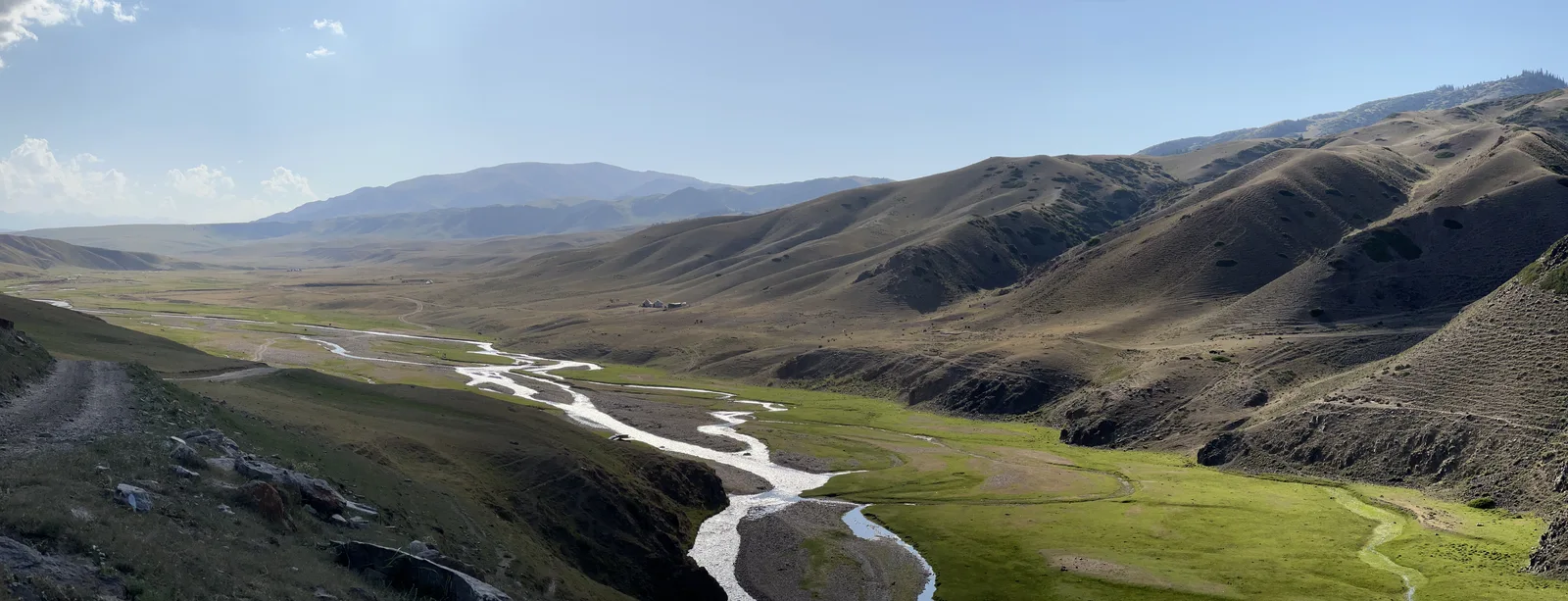
May turns the foothills into a blooming carpet of tulips and poppies, and mountain rivers, including the Charyn, swell with snowmelt into a genuinely powerful sight. By July-August, the steppe fades to golden-brown, but this is exactly when high-altitude routes like the Asy Plateau (2,800 meters) — snow-covered until mid-summer — open up.
September and October: the quiet shoulder season
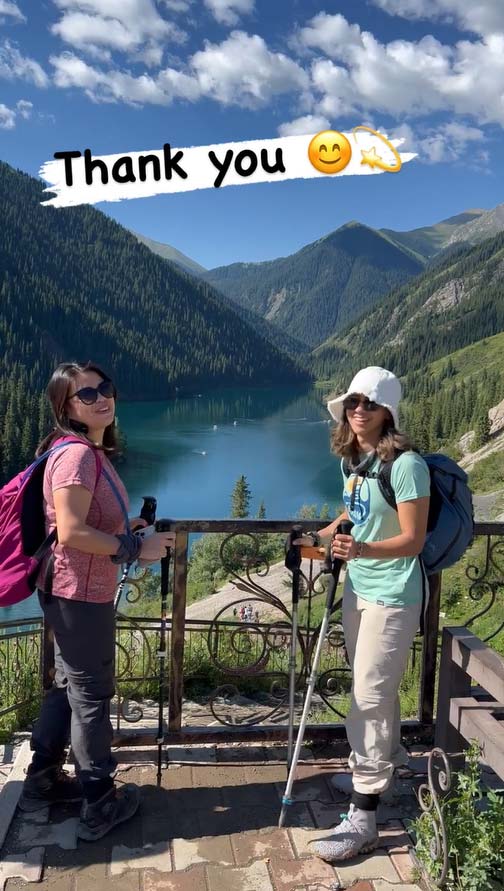
September is when the steppe shifts color again, this time to warm gold, while the tourist flow that thinned out after summer vacations leaves the viewpoints of Kolsai and Charyn almost entirely to the traveler. October adds crisp mountain air — at the cost of an earlier sunset.
The Kolsai cascade: three lakes, three climates
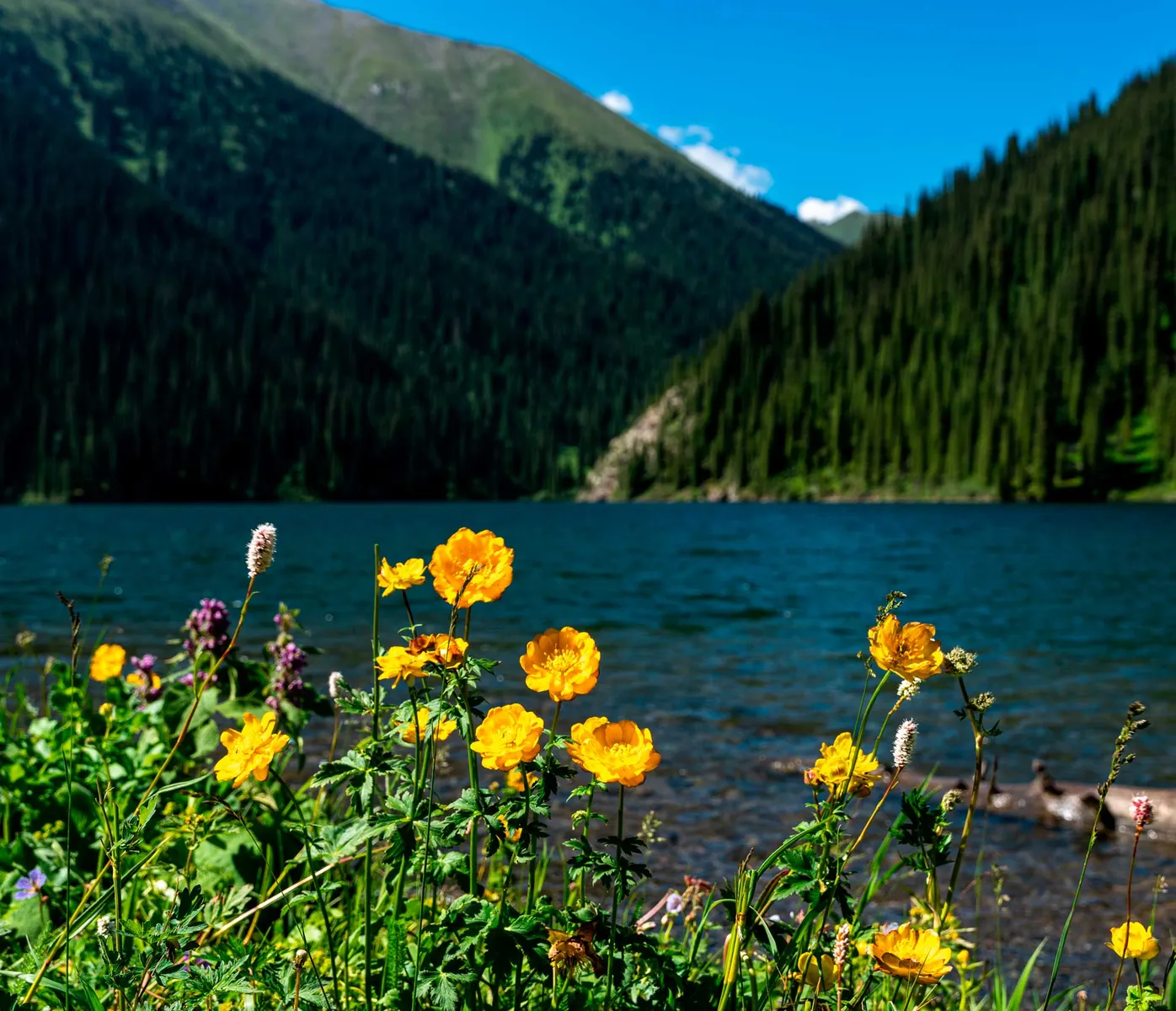
One detail worth knowing about the Kolsai Lakes: they sit in a cascade at three different elevations — roughly 1,800, 2,250, and 2,700 meters — and the weather at each can differ noticeably even on the same day.
Planning around the crowds: which tour fits when
If your only available window is July-August, it's the individual tour format that helps offset the crowds: departure can shift an hour earlier than a group, and the route can be built to reach less-crowded points first. For those with flexible dates, a short one-day trip is best planned for September — for example, our Kolsai Lake & Charyn Canyon Express Tour — while a longer multi-day route, such as our 4-Day "Golden Ring" Jeep Expedition, works well in May or early June, before the summer heat sets in.